How To Write Fiction: A Guide for Poets

I was a poet to begin with.

tumblr_mwsez5FgJp1revnpdo1_500

And as a poet, I wrote slooooooooowly. Sometimes painfully so. I might spend an entire day, or week, or even month following the rise and fall of a line to its inevitable end.

To paraphrase Fred Chappell (another poet turned novelist), a good day’s work for a poet is to cross out the two lines he wrote the day before.

For someone like me in the habit of examining the universe two lines at a time, the idea of writing a novel—page after page after page, day after day after day—seemed daunting, to put it mildly.

You mean I have to write WHOLE PARAGRAPHS AT A TIME?

thatsimpossible

So, how did I get my poetry-wired brain from Point A (poem) to Point B (novel)?

Well, for starters, it took about a gazillion hours, numerous failed attempts, and the support from and commitment to my friend and coauthor Madelyn Rosenberg (shown here gleefully tormenting a toe-sock doll).

stmad

Most importantly, though, I had to let go of many of my deeply ingrained ideas about the writing process.

One. I could no longer write without “tuning in” consciously, the way I sometimes did when I wrote poetry.

It didn’t take me long to realize that strange, unacceptable things happened when I let my subconscious mind take over in fiction. I would sit down with the intention to write a romance novel, turn off my consciousness, and wake up a half hour later to find an intricate description of an old woman’s detached lung throbbing in the wildrose shrub outside an abandoned trailer’s front stoop.

what

Two. I could no longer count reading time as writing time.

Here’s how I work when writing a poem. I write a first line. I rewrite it. I write it again. Then I read it. Over. And over. And over until…………………………………………I’m ready to write the next line. Then I rewrite that line. Then I rewrite it again. Then I read it with the first line. Over. And over. And over until…………………………………………..I’m ready to write the third line. Which I rewrite and read and rewrite and read until…………….. I fall asleep in a puddle of drool.

Again, it’s pretty obvious this method is for crap when it comes to writing anything longer than a haiku. As I transitioned to writing fiction, I had to get comfortable with the idea that re-reading the entire manuscript from the beginning every time I sat down to work was not a practical option.

When desperate, I might use that method for paragraphs, pages, even chapters. But otherwise, it was onward! No looking back!

KeepGoing

(Thanks for the inspiration, hat girl.)

Three. I had to get my butt in the chair and type something, whether I thought I had anything to say or not.

I’m going to let Neil Gaiman field this one for me, because he said it perfectly:

If you only write when you’re inspired you may be a fairly decent poet, but you’ll never be a novelist because you’re going to have to make your word count today and those words aren’t going to wait for you whether you’re inspired or not.”

NeilGaimen

(Neil Gaiman. Tasty!)

And yet, even as I had to shake loose numerous impractical poetic notions when I turned to fiction, there were a few concepts which, right or wrong, stuck with me as I wrote DREAM BOY with Madelyn—and they remain now as I write my current work-in-progress.

Of these, the most crucial is perhaps this:

There are certain moments when only the exact word will do.

Yes, I know we’re supposed to spew out that first draft. Get the words down and worry about making them perfect once we have a beginning, middle and end.

Fiction-brain gets that process. I’m able to do that at least 93% of the time. For the other 7%, though, the poet in me is convinced that writing any old thing is a great idea…

165231__triumph_l

There are moments in writing when I need an exact word, dammit.

Its rightness is the bridge between what came before and everything that might come after. Its rightness is what makes the work, at least for that millisecond, worthwhile. Because for that millisecond, it’s not all about word count. It’s about following the right word to its best destination. It’s about accepting language for the gift that it is. In short, it’s what makes writing fun.

WhatsItAllFor

Even if I end up cutting the entire scene at some later date, I need that moment to keep me going. Without it, there is no joy in Mudville. Without it, what am I doing this for?

[Note: this post previously appeared on OneFour KidLit.]

Writing Tips from #TheWalkingDead

1. Everyone’s gotta suffer.

Suffering distills a character traits into their purest form. And nothing shows suffering better than The Walking Dead. We don’t get people, we get people in their rawest form. We get people whose leg is eaten by other people in front of his eyes.

TaintedMeat_500

If life didn’t suck and the world wasn’t glutted with all those eager, innard-munching zombies, Gareth might not ever eat Bob. Rick might not ever show his greatest kindness. Or greatest weakness. Or greatest courage. Or all three. (And sometimes all three at the same time.)

This suffering notion is probably something I should have picked up long ago when I read all that Greek drama in college. I remember my beloved professor repeating pretty much daily “we must suffer, suffer into truth.” Yet, somehow it never occurred to me that the reason freshmen were still reading about Agamemnon and Clytemnestra all those thousands of years later was because of the suffering as inextricably as the truth.

So give your character boils. And a limp. And let someone kick them or eat their limbs or whatever.

2. The more resonant the character, the more dramatic the swan song.


Hershel’s beheading. Andrea and Milton’s barber chair pas de duex. Lizzie and Mika’s twisted and senseless deaths. Beth’s blow-out. Think of anyone you’ve cared about on the show. Now think of the way that character ended their time on screen. There are almost always more bangs than whimpers. By his final curtain call, I was even bawling my eyes out over Merle (or to be more accurate, Daryl’s loss of Merle).

Big characters deserve a big death. It’s a mark of respect. Of course, since we’re not all writing about a zombie apocalypse, this big-for-big equation can translate into all kinds of big equivalents: big love, big failure, big discovery, big regret, big ball of string, big dream of becoming the best tutu seamstress on the east coast. Whatever.

3. Let the enemy surprise you.

Yeah, zombies are tricky b@*$tards who sometimes pop out of dark corners or rise from the mud in flash-flood areas. The point that has been made continually about this show, however, is that other humans, not zombies, are the real threat. So in some respects, the enemy itself is more nuanced than at first glance.

People aren’t just fighting zombies; they’re fighting humans. Beyond that, those human enemies can be downright surprising.

After seeing the Governor massacre his own townsfolk following his unsuccessful attack on the prison, for example, we find him wandering around like the grand poohbah of hopelessness. He has, to quote the poet Fred Chappell, let his life “grow bearded and strange.” When he then takes up with Lilly and Tara and little Meghan, it seems possible that the newly shaved “Brian” will go forth in the world as a transformed man, sharing SpaghettiOs and letting kids beat him at chess.

But lo and behold, no matter how he tries to avoid his worst self, a few episodes later, he–surprise!–amasses troops and goes all psycho Governor on the prison yard.

What can this teach us about writing?  First, our villains are much richer and more interesting when other, different lives seem entirely possible for them. Simultaneously (and contradictorily), there is a satisfaction of sorts in the reader’s understanding that a character inevitably fulfills his or her ultimate path.

Plucking the cord between those two opposites (the many paths/the single path) is one of the difficulties and joys of writing.

So let your protagonist’s enemy do something surprising. And then let them do what they were born to do.

4. Let the hero surprise you.

When Rick chomped into Joe’s jugular vein, I was, among other things, surprised! Like this guy:

(Perhaps this belongs under the “let your heroes learn from their enemies” column, because the neck-biting thing was a technique Rick must have picked up from some zombie along the way.)

How does that relate to writing? Again, it’s the cord thing. Some tension about where exactly your hero belongs on the moral spectrum isn’t necessarily a bad thing. There can be questionable acts which are justified, just as there can be the veneer of civility (aka Woodbury) over the most savage of hearts.

What situation that will allow your character to do something unforgivable–and still be understood and forgiven?

Go there.

5. When in doubt, “kill” someone.

In an “Ask Me Anything” interview on Reddit, Walking Dead creator Robert Kirkman was questioned about his process for approaching a character’s death.

His response: “Sometimes it’s something I’ve planned and built to for many issues. Other times it’s just me thinking ‘it’s been a while since something really interesting happened’ and killing a character on the fly.”

Cold? You bet. Effective? That too.

Along the same lines, Kirkman had this to say in the same interview:

“In my opinion, I feel like characters ripen like fruit. So while I wouldn’t say the more popular a character is the more likely they are to die, they do have to reach a certain level of popularity before they’ve ‘earned’ the death.

No character is too popular to die. (Suck it, Reedus!)”

First, a message to Kirkman: No killing Daryl!

And while we’re at it, no killing Carl and no (though this may be the futile wailing of the Greek chorus here) killing Rick!

Now, on to the actual objective of this post: how does all this relate to writing?

Killing off characters has long been considered one of the cheapest tricks in a fiction writer’s bag. And of course, it doesn’t–and shouldn’t–make sense for every story we write to end littered with a Hamlet-esque pile of bodies. (Of course, the bodies in The Walking Dead tend to take care of themselves–either being reanimated or devoured–so no littering there.)

That said, there is freedom in the notion of “killing a character on the fly”–whether we’re talking literal or (better in most cases) some metaphorical type of death.

The take-away? Interesting things can happen when we let go of the idea that the characters we love in a story must prevail.

And those metaphorical deaths can take many interesting forms: the loss of their humanity; the separation from whatever matters to them; the death of their dreams.

So, now it’s your turn to tell me: What have YOU learned from The Walking Dead? About writing? About life? About the zombie apocalypse? Post it in the comments below!

~

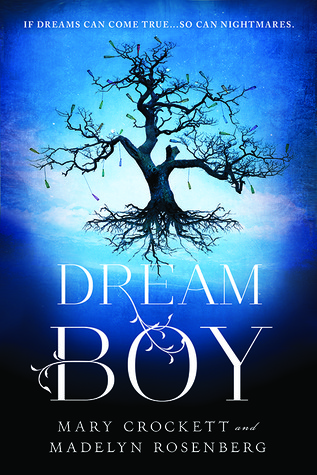
ZombieMaryMary Crockett is coauthor with Madelyn Rosenberg of the zombie-less novel DREAM BOY. Sadly, she suspects she would be among the first to turn in a zombie apocalypse.

You can make her book happy by ordering at IndieBound, Amazon, or Barnes and Noble. You can make her happy by saying “hi” on Twitter or Facebook.

(A version previously posted on The BookYArd.)

A History of the T-Shirt – Plus Giveaway – Signed Copy and DREAM BOY T-shirt!

To cMaryandMadelynDreamBoyTshirtselebrate our half-year anniversary (not to mention the 102 anniversary of the T-shirt!), the lovely Madelyn Rosenberg and I are giving away a copy of DREAM BOY signed by both of us — plus a groovy DREAM BOY t-shirt. You can enter on Goodreads.

As our readers are aware, the quirky, geeky Will is a T-shirt aficionado. So I’m offering here a few tid-bits about T-shirt history (which are new to me–but Will probably already knows).

T Shirt History1913: T-shirt ( so-called for the T-shape it makes) first used as a light undershirt for sailors in the Navy

1920: the word “T-shirt” first included in the dictionary

1932: Jockey International designs a modern T-shirt to absorb sweat for the University of Southern California Trojans football team

1Gob Tshirt938: Sears sells a 24-cent T-shirt called a “gob” shirt and marketed as either an outer-shirt or undershirt.

It did NOT look like this. (WTF is a gob anyway?)

1940s (early): Marines uses the Navy-style white tee dyed with coffee grounds to avoid being an easy target in the field

1940s (late): printed T-shirts enter the scene, such as the Smithsonian’s oldest printed tee, “Dew-It with Dewey,” from the 1948 presidential campaign of New York Governor Thomas E. Dewey

Dewey T Shirt

1951: Marlon Brando yells “STELLA!” while wearing a T-shirt in A Streetcar Named Desire

1955: James Dean rebels with no apparent cause — while wearing a T-shirt!James_Dean_in_Rebel_Without_a_Cause

1970s: Iron-on transfer developed

2006: Matt McAllister earns a Guinness World Record by donning 155 T-shirts at the same time

2007: Aaron Waltke beats McAllister’s record by simultaneously wearing 160 shirts

** Look for upcoming post on the top T-shirt slogans, and my person top ten shirts!

Just when you thought it was safe to go back on Youtube. Thanks #Nationwide.

I thought that Nissan #WithDad Superbowl commercial was about as depressing as an ad could get. That was until I saw the Nationwide #MakeSafeHappen Superbowl ad.

WTF!!!!!!

If my kid dies in a bathtub, Nationwide will make it all better? At least I get a life insurance settlement? Uhhhh…?

Nationwide has responded to criticism by saying the ad served their purposes–asserting that for them, it’s not really about selling insurance. (This is a good thing, because that ad sure as heck isn’t going to do it.) Here’s their statement:

“Preventable injuries around the home are the leading cause of childhood deaths in America. Most people don’t know that. Nationwide ran an ad during the Super Bowl that started a fierce conversation. The sole purpose of this message was to start a conversation, not sell insurance…. In fact, thousands of people visited MakeSafeHappen.com, a new website to help educate parents and caregivers with information and resources in an effort to make their homes safer and avoid a potential injury or death. Nationwide has been working with experts for more than 60 years to make homes safer. While some did not care for the ad, we hope it served to begin a dialogue to make safe happen for children everywhere.”

Call me crazy, but perhaps a funny ad in which people actually PREVENT some potentially tragic accidents might have been a better way to go.

Thanks Nationwide. If I want to be depressed by a dead kid, I’ll read The Lovely Bones.

Here are some top tweets:

The One Thing COVER REVEAL + GIVEAWAY!!!

I know you’re itching to see the gorgeous new cover for THE ONE THING, coming out from Marci Lyn Curtis this fall. And now you can!

I’m not one to make you scroll, people. You can thank me now. Here it is in all its glory!

The One Thing Marci Lyn Curtis Cover

This book, people. This book.

I’ll give you all the Goodreads blurby stuff in a minute, but first: THIS BOLD, BADASS, EFFERVESCENT BOOK.

Thanks to Marci’s generous spirit, I had the opportunity to read the manuscript for The One Thing last month, and I can tell you true: all the buzz about this book is for real. I was blown clean away.

So much funny. So much heart. It’s not every day you get a narrator who can sass and swear and be so loveable in such unexpected ways.

Near the end of the novel, a boy explains his mom this way: “She’s a crier… Happy tears, sad tears. You name it.” And by the last page, that was me, too. Yep, I cried. But they were honest, happy tears. And I was glad to cry them.

Now, as promised, here’s the blurb:

A soaring tale of life and love, of sacrifice and renewal, and learning to see people as they really are.

Maggie Sanders might be blind, but she won’t invite anyone to her pity party. Ever since losing her sight six months ago, Maggie’s rebellious streak has taken on a life of its own, culminating with an elaborate school prank. Maggie called it genius. The judge called it illegal.

Now Maggie has a probation officer. But she isn’t interested in rehabilitation, not when she’s still mourning the loss of her professional soccer dreams, and furious at her so-called friends, who lost interest in her as soon as she could no longer lead the team to victory.

When Maggie first meets Ben, she thinks she can add crazy to her list of problems. But the precocious ten-year-old isn’t a hallucination. Maggie can actually see him. She immediately befriends the kid, desperate for any chance to see again.

It turns out Ben’s older brother is Mason Milton, the the ridiculously hot lead singer of Maggie’s new favorite band. Music is the first thing that has made Maggie feel alive since losing her sight. But when she learns the real reason she can see Ben, Maggie must find the courage to face a once-unimaginable future…before she loses everything she has grown to love.

Sound awesome? Well, it is.

BUT WAIT, you ask, WASN’T THERE SOME MENTION OF A GIVEAWAY?

Like maybe some nifty custom earrings? Just click here.

custom earrings book swag

If you win, you can thank this fine soul:

Marci Lyn Curtis author photoMarci Curtis grew up in Northern California, where she went to college and met an amazing guy in a military uniform. Two college-aged kids and one dachshund later, she lives in Maryland, where she laughs too loudly and eats peanut butter off spoons. Her YA contemporary debut, The One Thing, comes out September 8th, 2015 via Disney-Hyperion.
Goodreads
Twitter
Facebook
Pinterest

Um, Nissan, have you actually listened to that song the whole way through? #WithDad

So, I didn’t watch the Superbowl, not even for the commercials. I did, however, happen upon the Nissan Superbowl commercial when my daughter asked me if I could do a Dutch braid. I told her I couldn’t, but I knew someone who could show me how.

Yep, good ole Youtube, my go-to for all questions of plumbing, electronics or hair-styling.

Little did I expect to be thrown into a coma of despair.

Thanks for nothing, fair weather friend.

Because the ad before the Dutch braid video was, you guessed it, Nissan’s “With Dad.”

When I heard the first strains of “Cats in the Cradle”–a song about a father who ignores his young son, only to be ignored by his adult son during the father’s old age–I thought, hmmm… Where are they going with this?

And yeah, it was kind of where I feared.

Here’s the commercial, in case your day is skipping along a bit too perkily.

And here are the complete lyrics to “Cat’s in the Cradle” by Harry Chapin.

My child arrived just the other day
He came to the world in the usual way
But there were planes to catch and bills to pay
He learned to walk while I was away
And he was talkin’ ‘fore I knew it, and as he grew
He’d say “I’m gonna be like you, Dad
You know I’m gonna be like you”

And the cat’s in the cradle and the silver spoon
Little boy blue and the man on the moon
When you comin’ home, Dad
I don’t know when, but we’ll get together then
You know we’ll have a good time then

My son turned ten just the other day
He said, “Thanks for the ball, Dad, come on let’s play
can you teach me to throw”, I said “Not today
I got a lot to do”, he said, “That’s ok
And he walked away but his smile never dimmed
And said, “I’m gonna be like him, yeah
You know I’m gonna be like him”

And the cat’s in the cradle and the silver spoon
Little boy blue and the man on the moon
When you comin’ home, Dad
I don’t know when, but we’ll get together then
You know we’ll have a good time then

Well, he came from college just the other day
So much like a man I just had to say
“Son, I’m proud of you, can you sit for a while”
He shook his head and said with a smile
“What I’d really like, Dad, is to borrow the car keys
See you later, can I have them please”

And the cat’s in the cradle and the silver spoon
Little boy blue and the man on the moon
When you comin’ home son
I don’t know when, but we’ll get together then, Dad
You know we’ll have a good time then

I’ve long since retired, my son’s moved away
I called him up just the other day
I said, “I’d like to see you if you don’t mind”
He said, “I’d love to, Dad, if I can find the time
You see my new job’s a hassle and kids have the flu
But it’s sure nice talking to you, Dad
It’s been sure nice talking to you”

And as I hung up the phone it occurred to me
He’d grown up just like me
My boy was just like me

And the cat’s in the cradle and the silver spoon
Little boy blue and the man in the moon
When you comin’ home son
I don’t know when, but we’ll get together then, Dad
We’re gonna have a good time then

~

Yeah, the commercial cuts off at the baseball verse, but I can’t hear the first part of that song without knowing the end of it. That family is doomed! I’m telling you, DOOMED!!!

I needed therapy. And therapy, of course, comes best in the form of other people’s tweets. Here are some of my faves. (Thanks, Twitter, for being there when Youtube wasn’t.)